
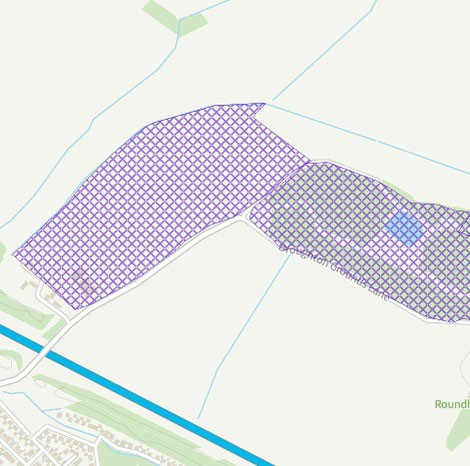
Here at Geo-Integrity we regularly get involved in the development of sites where historic landfills have been either on the site or immediately adjacent to the site. In the UK, legal responsibility for controlling development on historic landfill sites is shared between several bodies, depending on the issue and the stage of development. The main responsibilities usually sit with the following:
1. Local Planning Authority (LPA)
Your local council (district, borough or unitary authority) is the primary body responsible for controlling development through the planning system. They must:
- Identify historic landfill sites in their planning evidence (e.g. via Environmental Health or GIS data)
- Require appropriate Land Contamination Risk Assessments before granting permission
- Attach planning conditions requiring investigation and remediation
- Refuse development if the risks cannot be safely managed
They act under:
- Town and Country Planning Act 1990
- National Planning Policy Framework (NPPF)
- Environmental Protection Act 1990 (Part 2A guidance)
In simple terms: no development can legally proceed without the LPA’s consent.
2. Environment Agency (EA) – in England
The Environment Agency is a technical and regulatory consultee for landfill and contamination issues. It:
- Holds data on historic landfill locations
- Advises the LPA on pollution, landfill gas, groundwater, and stability risks
- Regulates environmental permits (if needed)
- Can prevent development if there is an unacceptable risk to controlled waters
They do not decide whether planning permission is granted, but their advice heavily influences the decision.
(Scotland: SEPA, Wales: Natural Resources Wales, N. Ireland: NIEA)
3. Landowner / Developer
The legal responsibility for actually assessing and managing the risk almost always rests with the developer or the current landowner (and sometimes former operators of the landfill)
They must pay for:
- Site investigations
- Risk assessments
- Remediation works
- Ongoing monitoring (e.g. landfill gas systems)
Under environmental law, the “polluter pays” principle applies where the polluter can be identified.
4. Environmental Health Department (Local Authority)
Separately from planning, the local council’s Environmental Health team can act under Part 2A of the Environmental Protection Act 1990. If a site is formally determined as “Contaminated Land”, they can:
- Force investigation
- Require cleanup
- Recover costs from liable persons
5. Building Control
Even after planning is granted, Building Control must ensure any structures are designed to be safe in relation to:
- Ground gases (methane, CO₂)
- Ground stability
- Contamination pathways
They can refuse to sign off buildings that do not meet safety requirements.
In summary
Responsibility Who owns it
Planning permission Local Planning Authority
Contamination / landfill risk advice Environment Agency (or equivalent)
Cleanup and investigation Developer / landowner
Legal enforcement (contaminated land) Local Authority (Environmental Health)
Construction safety Building Control
If you have a site that has a contamination land planning condition and you need help with your responsibility to investigate it and possibly remediate it, why not send us an email on this link or call us on 01280 816409
Write a comment